Commercial Pest Control Services in Noida
Commercial pest management planning for Noida workplaces
Orient Pest Control supports commercial premises in Noida with site assessments for offices, retail spaces, warehouses, production floors and food-service operations. We begin by learning how the property is used, what staff have noticed and which rooms need priority attention. Exact service availability is confirmed from the full address.
Pest activity can be connected to deliveries, shared utility routes, moisture, waste storage or openings around the building envelope. Our visit reviews the evidence and nearby conditions together, then identifies practical control and prevention options suited to the premises.
14+
Our commercial team approaches each request with a clear inspection process and an emphasis on understanding the business environment before proposing work.
500+
The visit plan takes account of the building arrangement, business hours, reported activity and any areas that require controlled access.
100%
Any product or method considered for use is matched to the target pest, the location and the applicable directions for that service.
4 Hrs
For a time-sensitive request in Noida, tell us the sector, property type and issue so our team can check appointment availability.
An Inspection Plan That Fits the Site
Commercial Pest Control Services in Noida should begin with the actual conditions at the property. Sharing the site layout, reported signs and operating hours helps shape an inspection that is useful to the people managing the premises.
- 1. Begin With the Property and Its Operating Pattern
- 2. Commercial Property Conditions Across Noida
- 3. Site Clues Worth Recording Early
- 4. Pest Control Options for Commercial Locations
- 5. The Steps From Enquiry to Service Notes
- 6. Walkthrough Areas Inside the Building and Outside
- 7. Records for Facility, Safety and Quality Teams
- 8. Preparing Staff and Work Areas Before a Visit
- 9. Matching the Review to Your Type of Premises
- 10. Points to Compare When Choosing a Provider
- 11. Tracking Site Conditions Between Appointments
- 12. Information Needed for a Service Estimate
- 13. Asking for Help With an Urgent Site Concern
- 14. Daily Site Practices That Support Prevention
- 15. Keeping Business Contacts and Service Staff in Sync
- 16. Answers to Noida Business Pest-Control Questions
- Commercial Pest Control Services in Noida
1. Begin With the Property and Its Operating Pattern
Inspectors can look for activity around door seals, pipe entries, drainage edges, delivery areas and concealed building joints, then record where further checks may be useful.
Food residue, water leaks, open bins and gaps around service lines may create favourable conditions for pests. Where these issues are found, practical maintenance steps can be considered alongside control work.
A business may need a focused response to a recent sighting or a longer monitoring arrangement. The recommended scope follows the findings, the pest involved and the way the building operates.
The aim is to connect visible evidence with likely causes and clear next actions, rather than apply the same checklist to every commercial property.
2. Business Settings Found Across Noida
Noida includes technology offices, retail developments, institutional buildings, food businesses and distribution facilities. Their schedules, access rules and shared spaces differ, so inspection priorities should be agreed property by property.
- Changing site conditions: Construction, roadwork and changing site boundaries can disturb existing pest harbourage. Inspecting edges, service openings and waste areas helps identify routes that may need attention.
- Moisture and drain lines: Standing water in drains, sumps, containers and poorly drained ground can support mosquito activity, particularly during the monsoon.
- Planting and boundary strips: Vegetation, leaf litter and untidy perimeter strips can provide shelter for insects and rodents near entrances and ground-level rooms.
- Stock and dispatch movement: Manufacturing, storage, dispatch and staff-support areas have different pest risks. Goods handling, waste routines and open loading doors should be included in the inspection.
- Employee common areas: Canteens, locker rooms, rest areas and frequently used washrooms need routines suited to their occupancy and cleaning schedules.
- Vehicle entry and loading: Frequent deliveries and vehicle movement can affect loading bays, stored packaging and perimeter access points. Monitoring and housekeeping should reflect the way the site operates.
- Weather-related changes: Warm weather and monsoon moisture can change insect activity. Periodic inspection helps identify whether drainage, waste or entry-point controls need attention.
- Outer boundary conditions: Dust, stored materials and unmanaged waste near boundary lines can contribute to pest movement around service entries and garbage holding points.
Stock movement, maintenance work and shared service corridors can alter pest access routes over time. Including these operational details makes the review more relevant to the actual building.

3. Site Clues Worth Recording Early
Incoming goods, food storage, damp corners and exterior lighting can each affect pest activity. A site review therefore considers the surrounding conditions as well as the reported sighting.
| Pest or Activity | Typical Noida Site Locations | Business Impact to Consider | Possible Response Options |
|---|---|---|---|
| Cockroach activity (confirm during the Noida site assessment) | Canteens, pantry counters, dishwashing areas, dry stores, refuse rooms, floor drains and service voids | Direct risk of food contamination, food-hygiene findings, staff or visitor complaints, persistent odour in kitchen back areas (subject to findings at the individual premises) | Gel baiting at harbourage points, insecticidal dust in voids and shafts, drain treatment, crack sealing, subsequent activity checks (review with the facility representative) |
| Bed bug activity (include only where relevant to the agreed scope) | Staff rest areas, upholstered seating, fabric seams, bed frames where present and adjacent storage | possible reputational impact, unfavourable customer feedback, temporary area closure, compensation claims, brand audit failure (final recommendation follows inspection) | close inspection of the affected space, steam treatment, targeted application where appropriate, harbourage sealing, verification visits (check local site conditions before selecting measures) |
| Rat and mouse activity (adapt to the building layout and operating routine) | dry-storage rooms, kitchens, utility corridors, ceiling voids, cable ducts, basements, garbage yards, dispatch bays, ground-floor rooms (confirm during the Noida site assessment) | risk of food contamination, chewed wiring and fire risk, structural damage, disease transmission, audit non-conformity (subject to findings at the individual premises) | secured bait stations, adhesive monitoring boards, trap placement, entry-point proofing, drain grating, perimeter control (review with the facility representative) |
| Mosquito activity (include only where relevant to the agreed scope) | Lawns, business outdoor premises, loading and service areas, water features, fountains, drains, basement sumps, terrace water tanks, irrigation channels nearby (final recommendation follows inspection) | Outdoor nuisance, staff discomfort and concern about mosquito-borne illness; risk depends on local conditions | Larvicidal treatment of water sources, adult fogging, residual spraying, water management advisory (check local site conditions before selecting measures) |
| Fly activity (adapt to the building layout and operating routine) | Kitchen back areas, garbage yards, loading docks, buffet counters, outdoor dining, banquet service areas (confirm during the Noida site assessment) | risk of possible contamination of food areas, hygiene-related nonconformities, visible pest nuisance during functions and dining service (subject to findings at the individual premises) | UV insect light traps, fly glue units, residual spraying, waste-area treatment, sanitation advisory (review with the facility representative) |
| Termite activity (include only where relevant to the agreed scope) | timber furniture, wall panelling, door surrounds, wooden flooring, banquet décor, outdoor timber features and timber structures (final recommendation follows inspection) | costly damage to building fabric and interiors, loss of premium fit-outs, recurring repair costs (check local site conditions before selecting measures) | Drill-fill-seal treatment, chemical soil barrier, wood preservation, post-construction anti-termite application (adapt to the building layout and operating routine) |
| Ant activity (confirm during the Noida site assessment) | pantry spaces, food-preparation counters, room service trolleys, landscaped walkways, potted plants, ground-floor corridors (subject to findings at the individual premises) | risk of food contamination, staff or visitor complaints in rooms, recurring nuisance trails in landscaped areas (review with the facility representative) | Bait-based colony elimination, crack treatment, perimeter spraying, nest treatment (include only where relevant to the agreed scope) |
| Spider activity (final recommendation follows inspection) | storage rooms, ceilings, outdoor lighting, stairwells, garden areas, service structures (check local site conditions before selecting measures) | Occupant discomfort, housekeeping complaints, visible webbing in occupant-facing zones (adapt to the building layout and operating routine) | removal of visible webs, residual treatment, lighting and vegetation management advisory (confirm during the Noida site assessment) |
| Pigeon access or nesting (subject to findings at the individual premises) | Roof edges, signage, ledges, loading canopies and other elevated building features | droppings, surface deterioration, slip concerns, nesting material and hygiene issues near food zones (review with the facility representative) | bird-exclusion netting, anti-perching devices, ledge proofing, droppings removal and sanitisation (include only where relevant to the agreed scope) |
| Insects associated with stored goods (final recommendation follows inspection) | dry stock areas, grain or flour containers, spice storage and packaged inventory (check local site conditions before selecting measures) | stock damage, product loss, inspection findings and recurrence where storage controls are poor (adapt to the building layout and operating routine) | Targeted fumigation where required, shelving treatment, stock rotation advisory, monitoring (confirm during the Noida site assessment) |
The table below outlines examples of commercial areas and the types of observations that can guide a site-specific recommendation.
4. Pest Control Options for Commercial Locations
Commercial Pest Control Services in Noida may cover selected indoor rooms, service routes and exterior zones when these areas are included in the agreed scope. The method and precautions are decided after the property and reported issue have been reviewed.
Checking Food-Service Areas for Cockroach Signs
In food preparation spaces, checks may include equipment edges, sink and drain areas, cupboard joints and waste points. Any proposed action should be coordinated with cleaning and food-handling routines.
Reviewing Soft Furnishings and Rest Areas
When bed bug activity is suspected, the assessment can include furniture joints, upholstery seams and nearby resting areas. The next steps are based on the evidence found and the preparation needed for the selected method.
Finding Rodent Routes Around Stock and Utilities
Rodent inspections can review droppings or gnaw marks, food access, sheltered movement routes and gaps around doors or service pipes. Monitoring and proofing may be considered together where suitable.
Reducing Mosquito Risks in Outdoor Sections
Outdoor reviews may check blocked drains, containers holding water, damp ground and poorly maintained corners. Reducing breeding opportunities is considered before adding other measures.
Assessing Timber, Fixtures and Building Joints
A termite concern is assessed in relation to the affected material, the signs observed and the construction details available. Options are discussed only after these points have been reviewed.
Investigating Fly Activity Near Waste Handling
Fly concerns can be associated with waste handling, drains, food residue or receiving doors left open. The response should consider the conditions drawing insects to the area, not only the visible insects.
Tracing Ant Movement to Entry Points
Ant movement can help indicate a food source or an entry gap. Targeted steps are more useful when paired with sensible storage, spill removal and repairs to relevant openings.
Managing Bird Access on Building Features
Bird activity may affect roof edges, signs, ledges and canopies. Where required, site-appropriate exclusion and safe cleaning arrangements can be discussed with the property representative.
Monitoring Visits With Clear Site Notes
A recurring plan can set out visit intervals, monitoring locations, reporting contacts and how new sightings should be recorded. The schedule should reflect the site findings and business requirements. For Commercial Pest Control Services in Noida, share the site type, access window and details of the concern.
Before work begins, the selected method and its precautions should be explained to the site contact. Food-contact items, equipment and nearby occupied areas must be managed according to the service instructions.
Call +91 98105 171995. The Steps From Enquiry to Service Notes
The initial discussion establishes the business type, location of the concern and access arrangements. A walkthrough can then help separate visible signs from possible contributing conditions.
Property Walkthrough & Pest Risk Mapping
After the review, the nominated contact can discuss the proposed areas, timing, preparation steps and work included before approving the service.
Programme Design & Transparent Proposal
The team works within the confirmed scope and follows precautions appropriate to the selected method. Operational changes or access restrictions should be raised with the site contact before work proceeds.
Sanitation & Housekeeping Advisory
Where follow-up visits are included, observations can be compared over time to assess changes in activity and decide whether another inspection is appropriate.
Exclusion & Proofing
A close-out note may summarise the areas visited, actions completed and maintenance items raised for the business team to consider.
Targeted Low-Toxicity Treatment
Depending on the concern, a walkthrough may include washrooms, pantry points, stock rooms, plant areas, receiving bays and the building perimeter.
Monitoring Station Installation & Mapping
Different business functions need different checks: food preparation, stock storage and desk-based work do not share identical risks or access arrangements.
Digital Reporting, Follow-Up & Review
If your organisation uses an approval workflow or a standard reporting template, share the requirements before the service scope is confirmed.

6. Walkthrough Areas Inside the Building and Outside
A site plan can identify reception, work floors, production rooms, storage zones, staff facilities, utility routes and any exterior points included in the review.
- Kitchen and pantry zones: Review drains, equipment bases, storage cupboards and waste points; select suitable methods only after checking the affected area
- Office floors and shared rooms: Check pantry storage, washrooms, service openings and shared furniture according to the signs reported by staff
- Staff dining spaces: Coordinate inspection and any treatment around food handling, cleaning routines and the agreed service window
- Meeting and function areas: Plan checks around booking schedules and inspect the service areas included in the agreed scope
- External business zones: Review standing water, vegetation, waste points and perimeter access before recommending suitable measures
- Changing rooms and fabric storage: Review moisture, stored fabrics, utility gaps and cleaning access where the inspection identifies a concern
- Stock rooms: Inspect packaging, shelving, stock placement and access gaps; recommendations depend on the pest signs observed
- Refuse and delivery points: Review bin condition, collection timing, drains and loading access to identify practical prevention steps
- Lower levels and service routes: Check pipe entries, floor drains, damp spots and concealed access points as part of the site review
- Planting and boundary strips: Inspect water-holding features, leaf litter, planting beds and perimeter conditions before deciding on control measures
- Fitness and locker areas: Arrange checks around opening hours and assess lockers, wet areas and storage spaces where relevant
- Staff support areas: Review food storage, waste routines, lockers and service access to identify the conditions contributing to activity
- Parking edges and external walls: Check waste storage, drains, vegetation and gaps around service entrances as part of perimeter inspection
Rooms with restricted access, sensitive equipment or escort requirements should be scheduled with the facility representative before the visit.
7. Records for Facility, Safety and Quality Teams
Useful service notes help managers assign maintenance actions and track repeat observations. Reporting arrangements for Commercial Pest Control Services in Noida can be agreed as part of the written scope.
The reporting package varies with the arrangement, so confirm whether it includes visit summaries, monitoring observations, treatment information or property-care recommendations.
| Records Often Requested | Documentation to Confirm |
|---|---|
| Pest Control Contract (subject to findings at the individual premises) | Formal AMC agreement with defined scope, frequency, service windows and escalation matrix (review with the facility representative) |
| Visit Records (include only where relevant to the agreed scope) | Digital service reports with date, time, technician name, areas treated and observations (final recommendation follows inspection) |
| Chemical Records (check local site conditions before selecting measures) | Product name, active ingredient, CIB&RC registration number, MSDS and dilution details (adapt to the building layout and operating routine) |
| Monitoring Map (confirm during the Noida site assessment) | Numbered layout of bait stations, adhesive monitoring boards and insect monitors with placement rationale (subject to findings at the individual premises) |
| Trend Analysis (review with the facility representative) | Monthly and quarterly pest activity trends by zone, with recommended actions (include only where relevant to the agreed scope) |
| Corrective Action Log (final recommendation follows inspection) | Record of issues identified, action taken, responsible person and closure date (check local site conditions before selecting measures) |
| Technician Credentials (adapt to the building layout and operating routine) | Trained, certified technicians with identification and safety compliance (confirm during the Noida site assessment) |
| Staff Training (subject to findings at the individual premises) | Optional awareness sessions for kitchen and housekeeping teams on pest prevention (review with the facility representative) |
If your team needs records for internal hygiene reviews or audits, list the required fields early so the format can be agreed before the first appointment.
8. Preparing Staff and Work Areas Before a Visit
Before treatment, staff should receive the preparation guidance, any temporary access restrictions and the instructions that apply before the affected area is used again.
- Treatment product details: Ask the service team for the applicable product details and safety information for the treatment included in the proposal
- Choice of treatment method: The approach is chosen for the target pest and the area involved; any relevant odour or access considerations should be discussed before work begins.
- Food-area preparation: The site contact receives preparation and cleaning directions for food, utensils and preparation surfaces before the affected area is used again
- Defined treatment zones: Treatment is limited to the areas and method included in the agreed scope, based on inspection findings
- On-site safety steps: The service team should explain the relevant precautions, access limits and handling instructions for the selected method
- Re-entry guidance: Follow the site-specific instructions provided for the treatment and do not reuse an affected area until the stated conditions are met
- Appointment planning: Where possible, agree a service window that reduces disruption; completion and re-entry timing depend on the method and site conditions
- Preventive measures: Proofing, sanitation changes and monitoring may complement treatment where inspection shows they are suitable
Food, utensils, stock, machinery and neighbouring workspaces need protection appropriate to the chosen method. Ask the service contact about the relevant product and safety information for the proposed work.
9. Matching the Review to Your Type of Premises
The examples below cover several types of commercial premises. A final plan should be based on the individual building, its occupants and the issue identified during inspection.
Office Suites and Shared Work Floors
An office review may include pantry storage, washrooms, ceiling void access, cable entries and waste collection points while respecting staff access and normal working hours.
Retail Units, Showrooms and Front-of-House Areas
Retail properties may need attention around stock shelves, rear rooms, receiving doors and customer-facing areas, with the appointment arranged to limit disruption to trading.
Warehousing, Freight and Dispatch Facilities
Warehouse checks can cover unloading bays, pallet locations, refuse areas, wall edges and shutter gaps. Dispatch patterns and vehicle movements may influence how the visit is arranged.
Commercial Kitchens and Food Production Rooms
Food businesses need coordination around preparation, washing, dry storage and refuse handling. The proposed service should set out precautions for areas connected with food.
Flexible Offices and Shared Occupancy Buildings
Shared workplaces may use common corridors, waste rooms and utility spaces. The nominated contact can confirm who controls those areas and how access will be provided.
Food Preparation and Catering Sites
Catering teams often work to delivery and cleaning schedules. Arrange the service window with the person responsible for food operations.
Neighbourhood Shops and Small Business Units
Smaller retail premises may benefit from a focused review of shelving, back cupboards, service openings and waste routines instead of a broad inspection of unrelated areas.
Learning Centres and Public Institutions
Schools and institutional buildings may require appointments around class times, staff duties and restricted rooms. The authorised representative should confirm the scope.
Large Campuses and Multi-Building Sites
A campus can contain several buildings with different functions. Confirm each block, shared facility and external zone included in the request.
10. Points to Compare When Choosing a Provider
Commercial Pest Control Services in Noida should reflect the layout and working pattern of the premises, not only the first pest sighting reported by staff.
- Coordination with site staff: We discuss shift patterns, access requirements and sensitive areas with the facility contact before proposing a service window
- Property-based assessment: Recommendations are based on the reported issue, the building layout and the findings recorded during inspection
- Integrated management steps: Inspection, prevention, monitoring and suitable treatment can be considered together according to the site findings
- Visit documentation: Confirm which visit reports, product details or monitoring records are included in the proposed service
- Treatment safety requirements: Product choice and preparation requirements depend on the treatment method, pest and affected space; confirm these before service
- Available visit windows: Share preferred timings and site access rules so a practical appointment can be checked against availability
- Coverage and response enquiries: Service availability for Noida and nearby NCR locations is checked against the full address and current team schedule.
- Written scope: The quotation should state the covered areas, proposed work, preparation needs and any follow-up arrangements
- Communication arrangements: Agree who will arrange access, receive service notes and report any new pest activity
- Available service methods: Available pest-management options depend on the site assessment and the work agreed with the provider
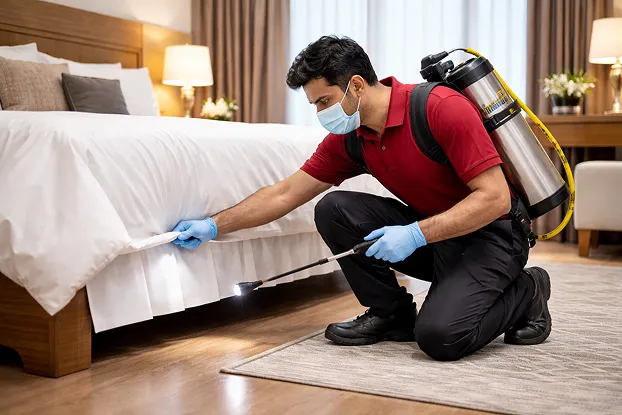
Ask how findings will be presented, what locations are included and how the provider will communicate preparation steps or follow-up actions.
11. Tracking Site Conditions Between Appointments
When comparing providers, review the written scope, safety explanations, reporting process and method for raising a repeat concern.
| Property Category and Scale | Possible Visit Pattern | Example Scope |
|---|---|---|
| Occupant House / Small Boutique Commercial Property (up to 30 rooms) (include only where relevant to the agreed scope) | monthly visit schedule + need-based kitchen visits (final recommendation follows inspection) | Cockroach, rodent, ant, mosquito and fly control across rooms, kitchen and common areas (check local site conditions before selecting measures) |
| Mid-Size Commercial Property (30–80 rooms) (adapt to the building layout and operating routine) | monthly visit schedule + fortnightly kitchen & garbage treatment (confirm during the Noida site assessment) | All common pests; office floors, kitchens, laundry, stores, banquet, outdoor premises (subject to findings at the individual premises) |
| Large Commercial Property (80–200 rooms) (review with the facility representative) | visits every two weeks + weekly kitchen monitoring (include only where relevant to the agreed scope) | Full IPM programme with monitoring stations, trend reports and audit support (final recommendation follows inspection) |
| Warehouse or Retail Facility / Business Property with Large Campus (check local site conditions before selecting measures) | Fortnightly + seasonal mosquito & garden treatment (adapt to the building layout and operating routine) | Indoor pests, mosquito control, termite protection, rodent perimeter control, bird proofing (confirm during the Noida site assessment) |
| Commercial Kitchen or Event Venue / Event Venue (subject to findings at the individual premises) | Monthly + pre-event treatment on request (review with the facility representative) | Cockroach, rodent, fly and mosquito control in service kitchens, halls and outdoor premises (include only where relevant to the agreed scope) |
| Restaurant / Cloud Kitchen (final recommendation follows inspection) | monthly or twice-monthly visits depending on activity (check local site conditions before selecting measures) | Cockroach gel baiting, fly control, rodent monitoring, food-safety documentation (adapt to the building layout and operating routine) |
Regular checks may help spot repeated activity around drains, waste rooms, receiving doors and stored goods before the issue spreads to other areas.
12. Information Needed for a Service Estimate
Visit frequency should be based on observed conditions, the type of operation and any internal hygiene or business requirements.
To prepare an estimate, share the property address, approximate size, affected areas, suspected pest and any access conditions that could affect the work.
- Premises size: The size and number of rooms or zones affect inspection time and the scope of work
- Number of work zones: Separate offices, stores, service corridors and shared facilities may need distinct checks or access arrangements
- Food-use requirements: Kitchens and food-preparation spaces can require additional coordination and specific preparation steps
- Type and extent of activity: The pest involved, how widely it has spread and the evidence found during inspection affect the proposed scope
- One-time or recurring visits: A one-off visit and a recurring monitoring programme have different scopes and costs
- Building access and layout: Basements, high-level spaces, restricted rooms and complex utility routes may affect the work required
- External zones: Perimeter landscaping, drains and water-holding spots may add inspection or prevention work where relevant
- Requested service timing: Work requested outside normal operating windows or around fixed events may need separate scheduling arrangements
- Documentation requirements: Requested service records or special reporting formats should be specified before the estimate is finalised
- Maintenance agreement details: Compare the duration, number of visits, included monitoring and process for additional requests
The proposal may also depend on how many buildings are involved, the scale of activity, the follow-up requested and whether ongoing monitoring is required.
For an urgent issue, explain what was seen, where it occurred and whether the area has access restrictions. The team can check the earliest available appointment.
Request Free Audit13. Asking for Help With an Urgent Site Concern
Urgent service still requires suitable preparation and safety communication. The service contact will explain the steps for the agreed method and whether a further visit may be needed.
Keep food in closed storage, clear waste regularly, remove spills and report leaks or damaged door seals. Everyday routines can reduce conditions that attract pests.
- bed bug concerns around furniture, fabric seams or staff-rest spaces that need inspection
- cockroach activity near food preparation, drains, equipment bases or waste collection points
- rodent signs near stored goods, utility openings, loading access or perimeter edges
- increased flying-insect activity around waste, standing water or outdoor gathering areas
- stinging-insect nests near doorways or frequently used outdoor spaces that require specialist assessment
- ant trails around food storage, pantry shelves or cracks near internal and external walls
- bird nesting or droppings on ledges, canopies, signs or other building surfaces
Where practical, review deliveries and packaging, keep stock away from damp floors and record repeated sightings so inspections can focus on the relevant locations.
14. Daily Site Practices That Support Prevention
Choose a staff contact who can arrange entry, explain working schedules and identify the affected areas before the appointment.
- Refuse handling: Keep waste in suitable closed containers and arrange regular removal from kitchens, stores and service routes
- Drain maintenance: Include floor drains and wet service areas in the cleaning schedule, and report recurring blockages or residue build-up
- Inventory storage: Keep cartons organised and raised where practical, rotate inventory and inspect deliveries for signs of pest activity
- Moisture reporting: Report leaking pipes, damp patches and standing water promptly so the source can be addressed
- Building gap checks: Note damaged door seals, wall gaps and openings around service pipes for timely repair
- Textile storage: Keep clean textiles in designated storage and report unusual marks or pest signs to the responsible team
- Scheduled walkthroughs: Include likely harbourage points in the site’s normal inspection routine where relevant to the property type
- Delivery areas: Keep loading points organised, remove discarded packaging and separate deliveries from food-preparation spaces
- Boundary maintenance: Remove accumulated leaf litter, maintain drainage and avoid storing unused materials against exterior walls
- Sighting records: Record the location, date and type of pest sign and pass it to the nominated site contact
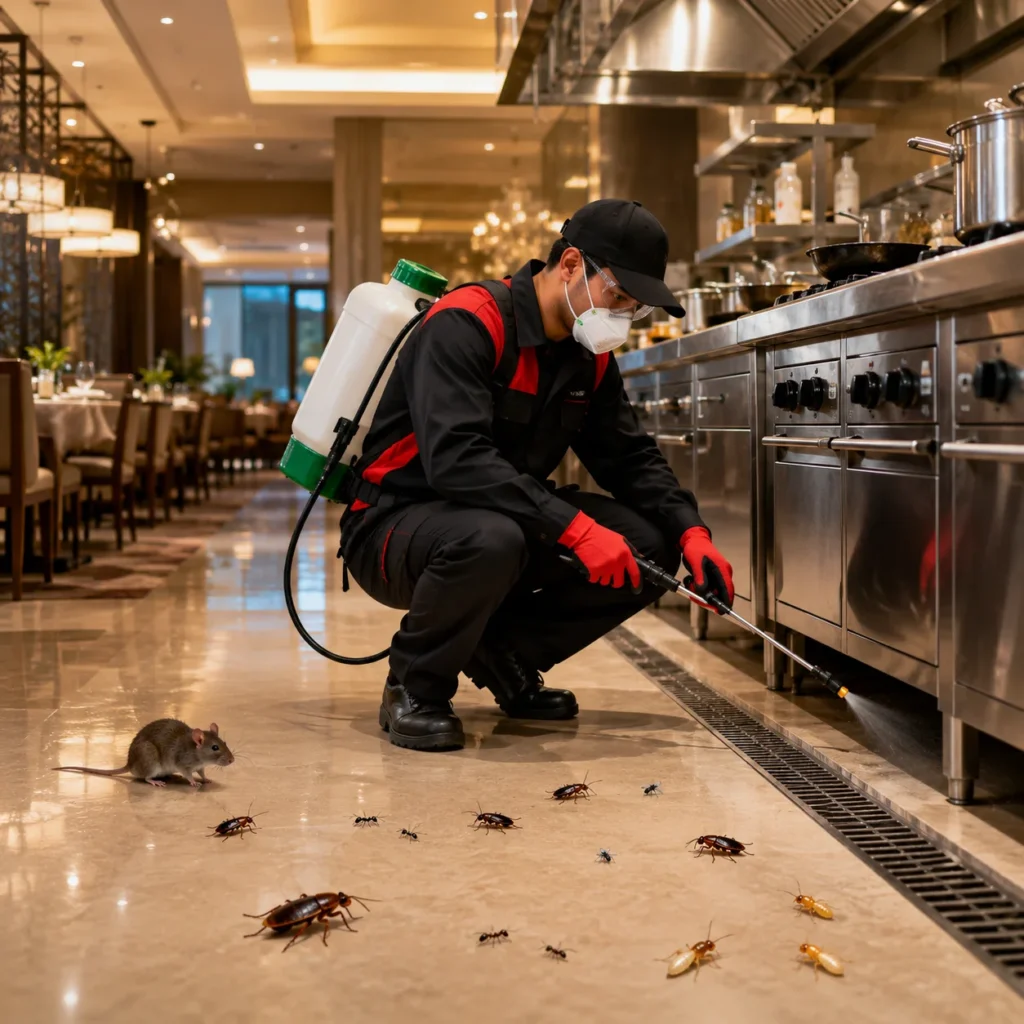
Ask employees to note when and where signs were observed and what type of activity they noticed. Specific reports make a later review more useful.
15. Keeping Business Contacts and Service Staff in Sync
If the work affects a kitchen, dispatch area or controlled production room, coordinate timing and preparation with the person responsible for that space.
After service, review the visit notes and assign agreed repairs or housekeeping tasks. Keep a record of any new signs between appointments.
For premises spread across multiple buildings, list every address or block included and confirm who will arrange access at each point.
Share the treatment guidance with relevant staff and follow the stated conditions before reopening the affected location.
A short review at the end of the visit can clarify completed work, pending tasks and the next check if one is required.
Yes. Noida business premises can be considered after the full address, property type and requested service have been checked against current coverage.
16. Answers to Noida Business Pest-Control Questions
Potential concerns include cockroaches, rodents, ants, flies, mosquitoes, termites, spiders and birds. Inspection helps confirm which issue is present and what may be contributing to it.
Orient Pest Control can review enquiries for commercial premises in Noida. Share the full site address, property type and affected areas so the team can check service availability before an appointment is confirmed.
Commercial sites may report cockroaches, rodents, ants, flies, mosquitoes, termites, spiders, bed bugs or bird activity. An inspection helps identify the issue and the conditions contributing to it.
The method and any product used should be selected for the pest and the site conditions. Protect or remove food, utensils and preparation items as directed, and follow the service-specific preparation, cleaning and re-entry instructions.
Ask which visit reports, product safety information, monitoring records or follow-up notes are included in the proposed service. The available documents depend on the work agreed for the property.
The estimate can depend on property size, number of areas, pest type, level of activity, access requirements, treatment method and whether monitoring or repeat visits are included. The team can discuss pricing after reviewing the site details.
Where scheduling allows, the visit can be planned around business hours and site activity. Agree on access restrictions, preparation, treatment timing and any re-entry instructions before work begins.
Visit frequency depends on inspection findings, pest activity, building use, hygiene routines and monitoring needs. A one-time service or a recurring plan may be considered according to the property requirements.
A bed bug concern can be assessed by checking relevant furniture joints, upholstery seams, bed or seating frames and nearby areas. Recommended next steps depend on the signs found and the preparation required.
Commercial kitchens, offices, retail spaces, event venues, warehouses and other business premises can be discussed for assessment. Exact availability and the included areas are confirmed from the site address and agreed scope.
The team can check service availability for the Noida address and nearby NCR locations. Share the complete address because coverage should be confirmed rather than assumed from a nearby sector or city name.
A recurring maintenance plan may suit premises that need ongoing monitoring and follow-up records. A single visit may be suitable for an isolated concern; the right scope depends on the inspection and the business requirements.
Response time depends on the address, the reported issue and the team schedule. Call +91 98105 17199 and share the property details so availability can be checked.
Commercial Pest Control Services in Noida
Tell us the type of property, the area affected and the signs employees have reported. These details help determine the information needed to arrange Commercial Pest Control Services in Noida.
- Commercial pest inspection for offices in Sector 18, Noida (address confirmation required)
- Commercial pest management near Sector 62 corporate offices (site confirmation required)
- commercial pest inspection around Sector 63 industrial and office units (coverage confirmation required)
- Commercial pest management enquiries from Sector 16 business premises (site confirmation required)
- Commercial pest inspection around Sector 15 commercial properties (address confirmation required)
- Commercial pest management near Sector 50 offices and retail premises (site confirmation required)
- Commercial pest inspection for business properties in Sector 19, Noida (confirm exact sector)
- Commercial pest management around Sector 1 industrial premises (coverage confirmation required)
- Commercial pest inspection near Sector 2 business locations (site confirmation required)
- Commercial pest management for commercial units in Sector 8 (address confirmation required)
- Commercial pest inspection around Sector 10 industrial properties (coverage confirmation required)
- Commercial pest management near Sector 57 workplaces (site confirmation required)
- Commercial pest inspection around Sector 58 commercial buildings (address confirmation required)
- Commercial pest management enquiries for Sector 59 business premises (site confirmation required)
- commercial pest inspection near Sector 65 office and industrial units (coverage confirmation required)
- Commercial pest management around Sector 67 commercial properties (site confirmation required)
- commercial pest inspection for retail and office premises near Sector 76 (address confirmation required)
- Commercial pest management around Sector 104 business locations (coverage confirmation required)
- commercial pest inspection for warehouses and distribution facilities in Noida (site confirmation required)
- Commercial pest management for factories and workshops in Noida (coverage confirmation required)
- Commercial pest inspection for food-service premises in Noida (address confirmation required)
- Commercial pest enquiries near adjoining Noida business clusters, subject to address verification
Before confirming work, agree on included areas, the method proposed, preparation instructions, documentation needs and any follow-up visit that may be appropriate.
Arrange a Site Discussion With Our Team
A useful plan matches the way the building is arranged and occupied. Inspection findings help set priorities for treatment, housekeeping and repairs.
Weather changes, deliveries, renovation work and new occupancy can alter site conditions. Reviewing the plan periodically helps it stay relevant. Commercial Pest Control Services in Noida should be planned around the inspection findings and the way the property operates.
Book Your Free Commercial Pest AuditBuilding a Service Plan Around the Property
If a department moves or staff report recurring activity, tell the service contact so the next review can revisit those locations.
Cleaning routines are most effective when combined with repairs, moisture control and suitable refuse storage. Together these steps can make a property less attractive to pests.
Assign responsibility for checking priority areas and logging fresh signs. Consistent notes help compare findings from one visit with the next.
Prevention Tasks for Everyday Operations
Choose a provider that clearly explains the service scope, relevant precautions, staff responsibilities and the process for raising further concerns.
Before approving the proposal, review the included locations, preparation steps, reporting details and terms for any additional visit.
Questions That Help Compare Providers
Seasonal conditions can influence pest pressure around drains, stored materials and frequently used receiving points. Recheck these locations as conditions change. Contact the team about Commercial Pest Control Services in Noida to discuss your location and service needs.
After rain, inspect drains and containers that may hold water; during busy delivery periods, review packaging, door gaps and waste stations.
Updating the Plan When Conditions Shift
For multi-department properties, group observations by building or floor so repeated concerns can be traced without confusion.
- Warmer conditions: Check food-storage areas, waste points and water sources when warmer conditions increase pest activity
- Wet-weather checks: Inspect drainage, water-holding containers and damp service spaces after rainfall, and arrange repairs where water accumulates
- Post-rain review: Recheck perimeter drains, storage areas and gaps that may have become more noticeable as site conditions change
- Cooler-season checks: Continue routine checks around heated food areas, stored goods and building openings instead of assuming pest activity has stopped
Before planning the next monitoring visit, ask the site contact to confirm which agreed maintenance actions have been completed.